
Carry out your research project with UTAMED’s support
The Javier Imbroda Research Project Grants are a UTAMED initiative designed to promote the development of basic and applied research projects, fostering knowledge generation and its transfer to society.
This annual call for proposals, awarded on a competitive basis, is aimed at researchers from universities and public and private research institutions with a view to promoting inter-university collaboration and creating synergies with UTAMED’s teaching and research staff.
With funding allocated to original projects of high scientific, social and economic value, these grants reinforce UTAMED’s strategic commitment to research excellence, innovation and meaningful impact within the academic and social environment.
total budget
per proyect
year proyect duration
areas of knowledge for research
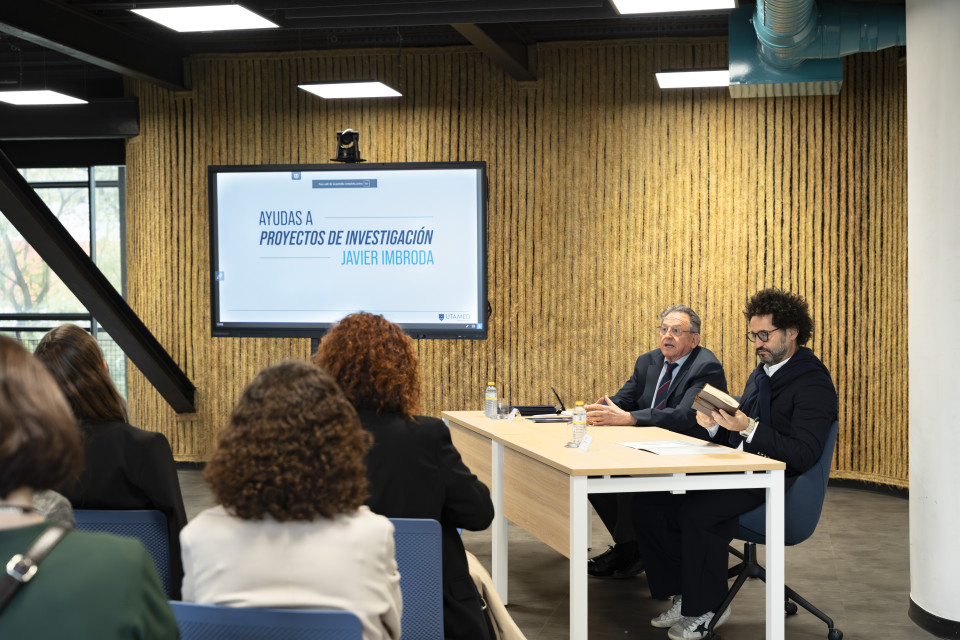
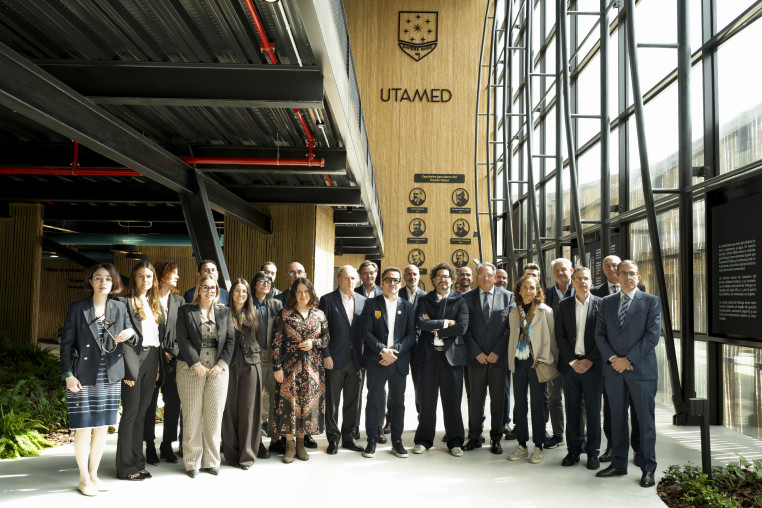
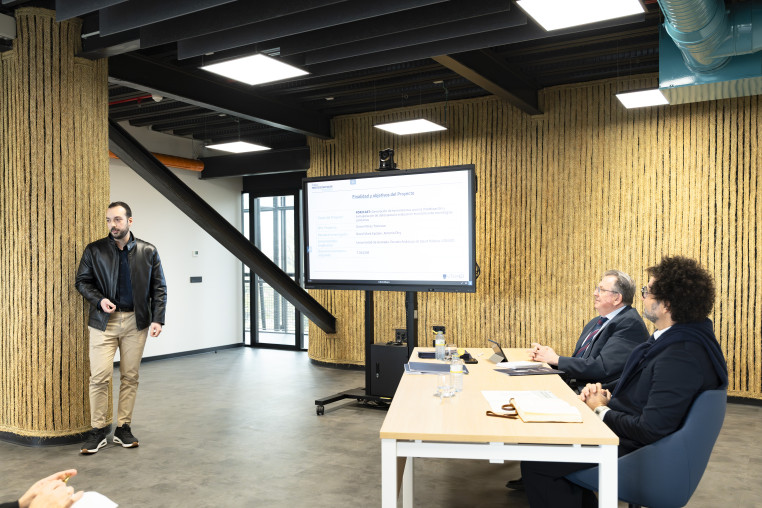
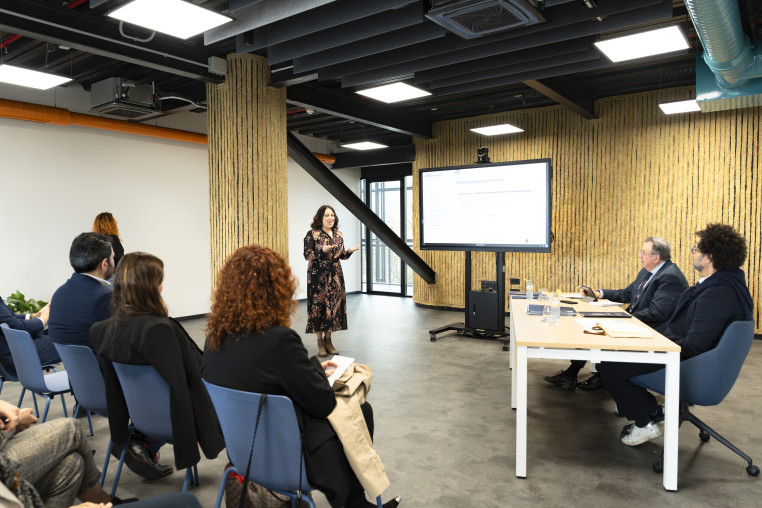
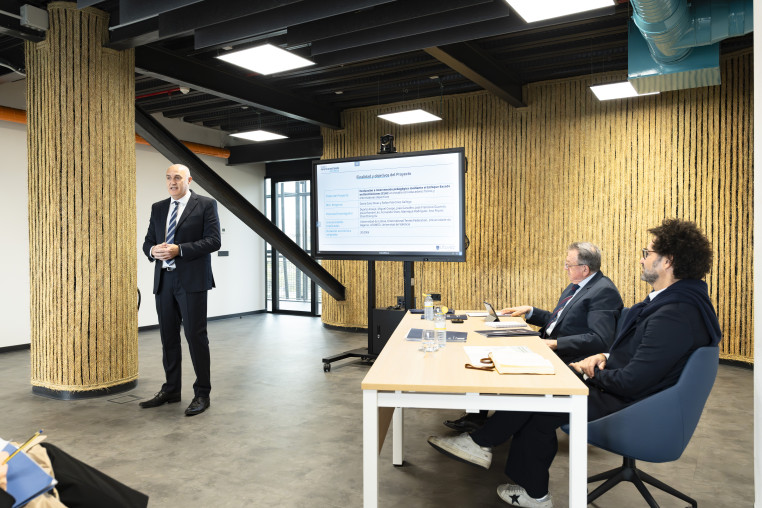
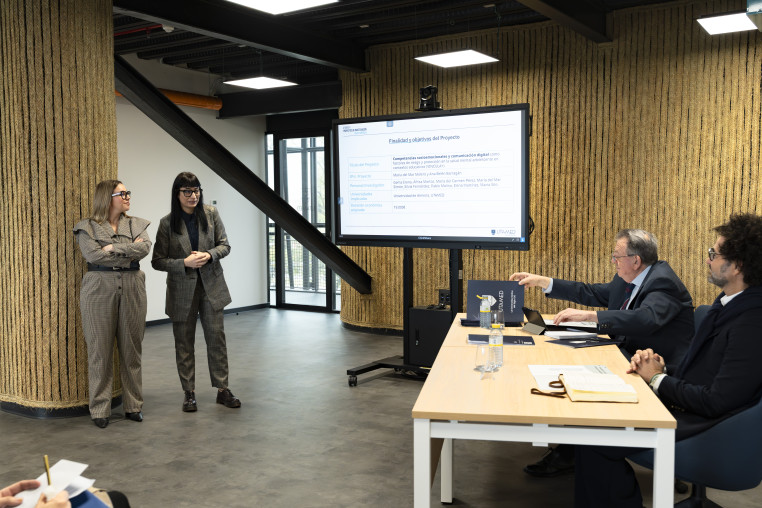
Here’s how the 2026 Edition of the Javier Imbroda Grants went
| Title | IP | Participating universities | Researchers | Areas of research |
| Legal Aspects of Deepfakes: Challenges for the Protection of Reputation, Privacy and One’s Own Image | Alba Paños y Marta Morillas | Universidad de Almería, Universidad de Granada, Universidad de Sevilla, UTAMED Universidad y Universidad Peruana de Ciencias Aplicadas | Fátima Pérez, María José Cazorla, Ana María Pérez, Inmaculada Vivas, Luis García, Marta Pardo y Nuria Martínez, Patricia Morales, Soraya Espino y Olga Alcántara | Legal Studies, AI and New Technologies |
| FORECAST: Development of tools for data modelling and extrapolation for the economic evaluation of healthcare technologies | Daniel Pérez Troncoso | UTAMED Universidad, Universidad de Granada y Escuela Andaluza de Salud Pública | David Mark Epstein y Antonio Olry | Health Economics and Health Technology Assessment |
| Biometric Systems and the Rule of Law: institutional efficiency, security and citizens’ rights from a political-criminal perspective (BIOEST) | Lorenzo Morillas Cueva y Eva Domínguez Izquierdo | Universidad de Granada, Universidad de Sevilla, Audiencia Provincial de Málaga y UTAMED Universidad | Miguel Ángel Moreno, Cristina Domingo, Samar Francisco, José Ríos, Juan Rafael Benítez y Francisco Rodríguez | Legal Studies, Criminology, Security and New Technologies |
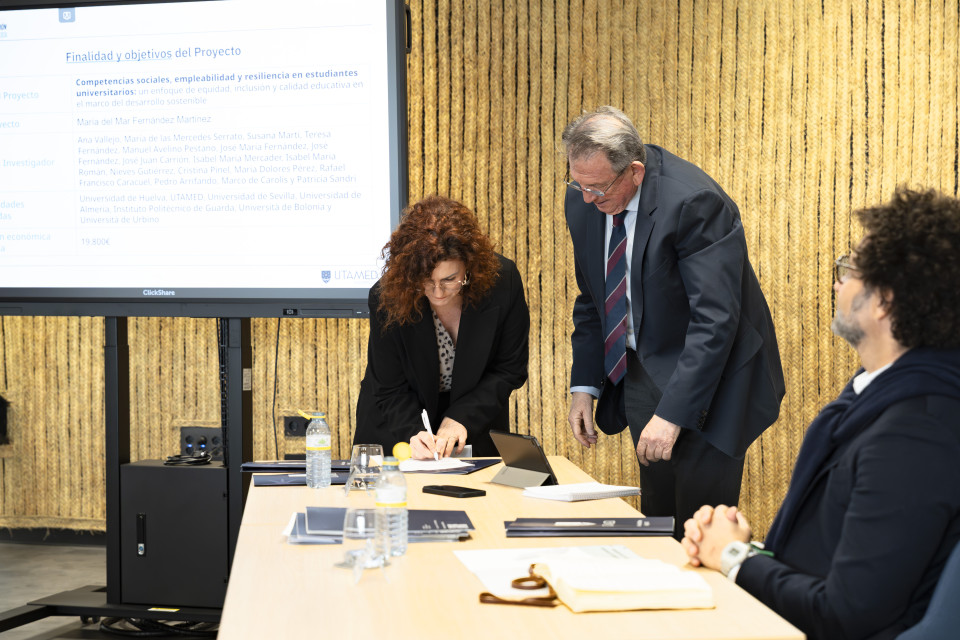
| Social skills, employability and resilience among university students: an approach based on equity, inclusion and educational quality within the framework of sustainable development | María del Mar Fernández Martínez | Universidad de Huelva, UTAMED Universidad, Universidad de Sevilla, Universidad de Almería, Instituto Politécnico de Guarda, Università de Bolonia y Università de Urbino | Ana Vallejo, María de las Mercedes Serrato, Susana Martí, Teresa Fernández, Manuel Avelino Pestano, José María Fernández, José Fernández, José Juan Carrión, Isabel María Mercader, Isabel María Román, Nieves Gutiérrez, Cristina Pinel, María Dolores Pérez, Rafael Francisco Caracuel, Pedro Arrifando, Marco de Carolis y Patricia Sandri | Education |
| Social-emotional skills and digital communication as risk and protective factors for adolescent mental health in educational settings (VINCULA+) | María del Mar Molero y Ana Belén Barragán | Universidad de Almería y UTAMED Universidad | Gema Erena, África Martos, María del Carmen Pérez, María del Mar Simón, Silvia Fernández, Pablo Molina, Elena Martínez y María Sito | Psychology, Health Sciences and Education |
| Development and preliminary validation of a digital tool for screening for risky eating behaviours in adults at cardiometabolic risk | María García Rodríguez y Guillermo Molina Recio | Universidad de Córdoba y UTAMED Universidad | Rafael Molina Luque | Psychology, Nutrition and Health Sciences |
| Assessment and pedagogical intervention using the Constraint-Based Approach (CLA): a study involving physical education teachers and sports coaches | David Sanz Rivas y Rafael Martínez Gallego | Universidad de Lisboa, International Tennis Federation, Universidade do Algarve, UTAMED Universidad y Universitat de València | Duarte Araújo, Miguel Crespo, Joao Carvalho, José Francisco Guzmán, Jesús Ramón Llin, Fernando Vives, Manrique Rodríguez, Ana Piquer y ChenCheng Xu | Sports Science |
| Industrial performance and transformation under environmental constraints in Europe | Rosa Puertas Medina | Universitat Politècnica de València y UTAMED Universidad | Consuelo Calafat, José Manuel Guaita Martínez, Daniel González Pérez y Lucía Gallego Martín | Industrial and Environmental Economics |
| Transparency, sustainability and corporate performance: empirical evidence on non-financial reporting or corporate sustainability reporting in Andalusia (2018–2024) | Salvador Marín-Hernández | UTAMED Universidad, Universidad de Santiago de Compostela, Universidad de Murcia y Universidad de Salamanca | Beatriz Aibar-Guzmán, María Esther Ortiz, Isabel María García, Marcos Antón y Antonio Rodríguez | Business, Finance and Corporate Sustainability |
How to apply for Javier Imbroda Grants
Define an original basic or applied research project aligned with the call’s priority areas and with scientific, social or economic impact.
Create a team of at least three researchers, with one or two principal researchers holding doctoral degrees and including at least one member of the UTAMED teaching and research staff.
Call closed | Prepare the project proposal, team CVs and the required documentation, and submit them in a single PDF file to dait@utamed.es
An independent jury will evaluate the proposals. The selected projects will receive financial support and will begin implementation in accordance with the established guidelines.
Requirements for obtaining the grant
To apply for the Javier Imbroda Research Project Grants, the following requirements must be met:
- Submit an original basic or applied research project.
- Have a team of at least three researchers.
- Designate one or two principal researchers holding a doctoral degree.
- Maintain an employment or statutory relationship with a university or research organisation based in Spain for the duration of the project (except for emeritus professors).
- Include at least one member of the UTAMED teaching and research staff in the team.
- Submit the required documentation within the established deadline and format.
21 January 2026
4 February 2026
Before 28 February 2026
March 2026
Frequently asked questions
Who can apply for these grants?
Researchers from universities and public or private research institutions, as well as emeritus professors and UTAMED staff.
How many projects will be funded?
The number will depend on the jury’s evaluation and the total available budget.
What areas of knowledge are included?
Law, Education, Communication and Marketing, Business and Economics, Nutrition, Psychology, Information and Communication Technologies, and Industry and Technology.
Is it mandatory to include UTAMED staff in the project?
Yes, all applications must include at least one member of the UTAMED teaching and research staff.
What expenses can be funded?
Equipment, travel, accommodation, consumables, scientific dissemination, events and other expenses necessary for the development of the project.
How is the grant paid?
60% upon award, 20% after submission of the first year’s report and 20% upon completion of the project.